
Market Update: August 17, 2026
For illustrative purposes only. The graphic depicts a general investment approach and is not intended as personalized investment advice. Asset allocation and model selection will vary based on each client's objectives, risk tolerance, financial circumstances, and investment time horizon.
Last week reinforced a central market theme: long-term interest rates remain a critical driver of asset prices.
Rising Treasury yields pressured U.S. equities, particularly technology and other long-duration growth stocks. The S&P 500 declined 1.4%, the Nasdaq 100 fell 2.4%, and the Russell 2000 lost 1.6%, even as much of earnings season moved into the rear-view mirror. The 10-year Treasury yield ended near 4.69%, while the 30-year briefly reached 5.28%, its highest level since 2001. This reflected concerns around fiscal borrowing needs, oil prices, and sustained long-end supply.
Treasury Secretary Bessent’s plan to expand purchases of longer-dated Treasuries was aimed at easing upward pressure on yields rather than replicating traditional quantitative easing. The policy shift also highlights the growing importance of short-term borrowing costs and the shape of the yield curve in managing federal interest expense.
Markets also responded to renewed geopolitical uncertainty surrounding Iran and energy supply. Oil strengthened, with WTI and Brent finishing at $82.40 and $88.52 per barrel, respectively. Gold extended its rally to $4,376 per ounce, while crypto markets surged amid renewed policy focus on digital-asset regulation.
Sector leadership was notably defensive and commodity-sensitive: Health Care rose more than 4%, supported by Moderna-related cancer treatment news, while Energy gained 2.8%. Technology, however, declined more than 3.5%.
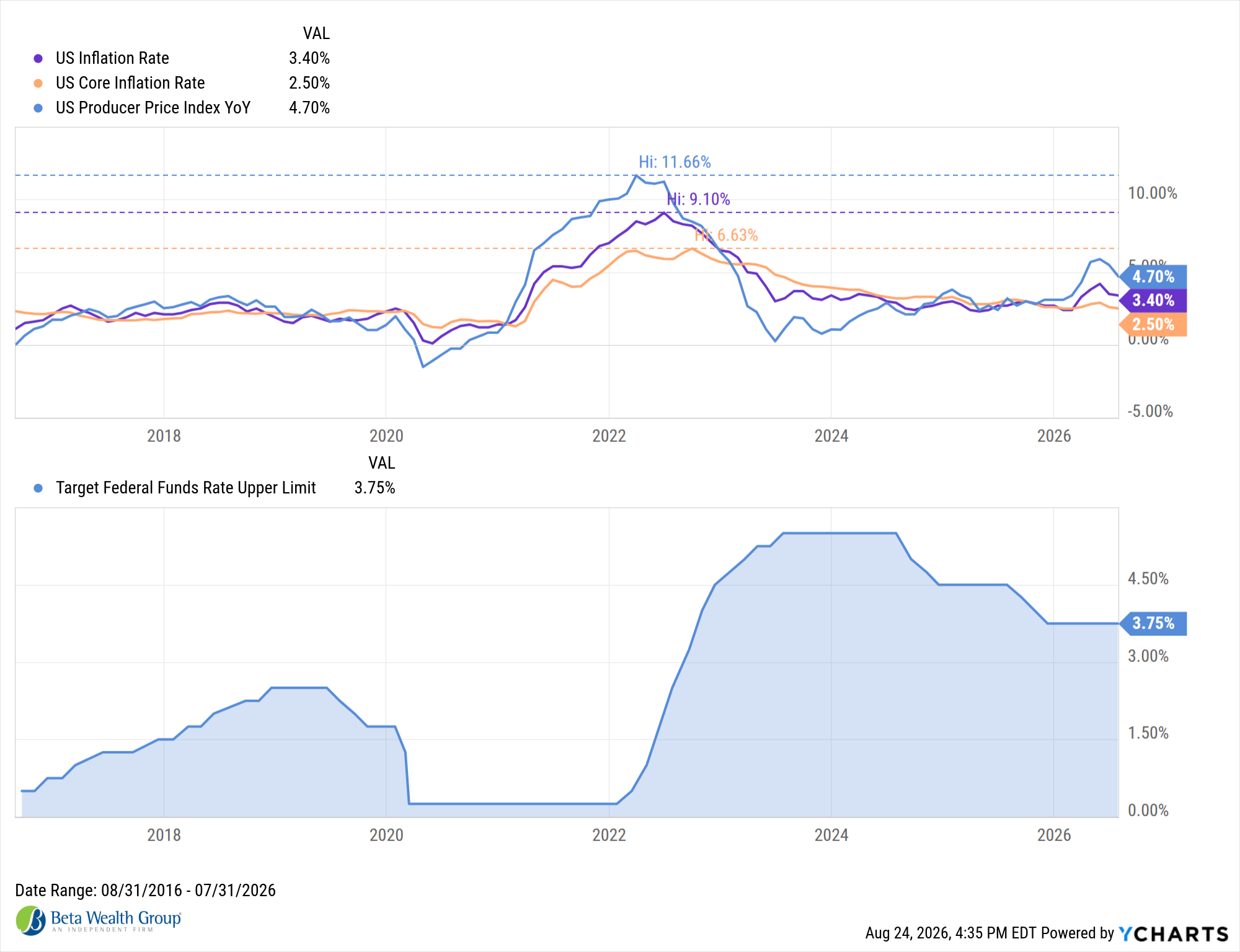
Looking ahead, investors will focus on Wednesday’s PCE inflation report and Nvidia earnings, followed by Friday’s Jackson Hole address from Fed Chair Warsh. Inflation, AI capital spending, Treasury-market conditions, and geopolitical developments remain the key variables shaping risk sentiment.
For investors, the message is clear: diversification across equities, fixed income, real assets, and quality exposures remains essential as markets navigate a higher-volatility, higher-yield environment.
The information above has been obtained from sources considered reliable, but no representation is made as to its completeness, accuracy or timeliness. All information and opinions expressed are subject to change without notice. Information provided in this report is not intended to be, and should not be construed as, investment, legal or tax advice; and does not constitute an offer, or a solicitation of any offer, to buy or sell any security, investment or other product.