
Market Update: September 14, 2026
For illustrative purposes only. The graphic depicts a general investment approach and is not intended as personalized investment advice. Asset allocation and model selection will vary based on each client's objectives, risk tolerance, financial circumstances, and investment time horizon.
Global markets navigated a volatile week shaped by geopolitical risk, rising energy prices, resilient U.S. labor data, and shifting expectations for central-bank policy.
U.S. equities proved relatively durable despite pressure from higher Treasury yields and escalating tensions around key Middle Eastern shipping routes. The S&P 500 finished modestly higher, while Technology and Energy led sector performance. Overseas markets were less resilient: European and Japanese equities declined as global sovereign yields moved higher, while Brazilian stocks surged on expectations that a tighter presidential race could improve prospects for fiscal discipline.
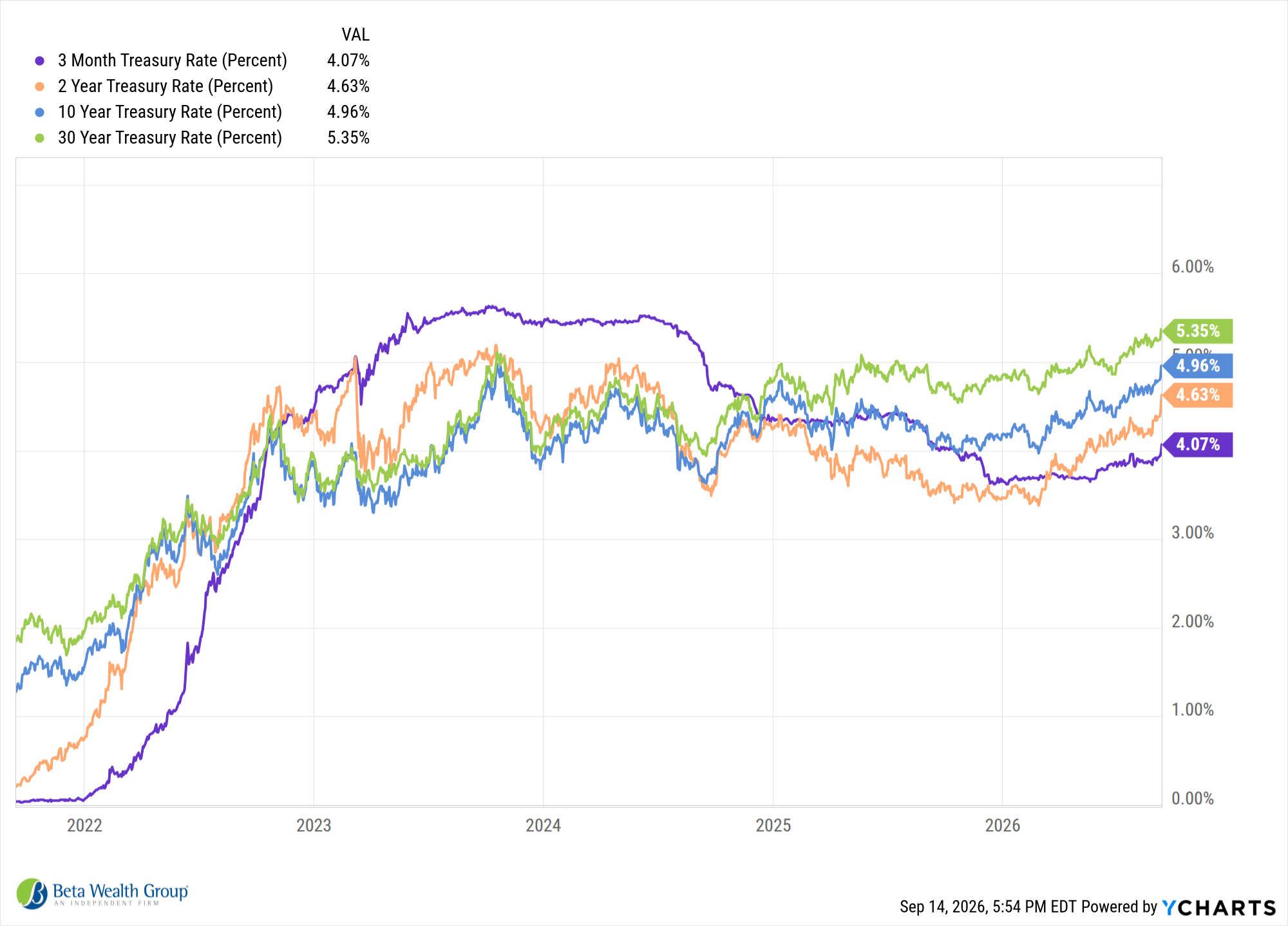
The key macro question is whether the latest energy shock proves temporary, or becomes a more persistent inflation catalyst. Oil prices moved sharply higher amid threats to transit through the Strait of Hormuz and disruptions near the Red Sea. At the same time, Treasury yields approached multi-year highs, with the 10-year nearing 5% and the 30-year moving above 5.40%.
Labor-market data complicated the outlook for the Federal Reserve. August payrolls rose by 162,000, substantially above expectations, unemployment held at 4.1%, and wage growth remained firm. Although Governor Waller cited signs of disinflation and expressed support for holding rates steady, stronger employment data and elevated energy prices have renewed concern that policy may need to remain restrictive for longer.
Inflation remains uneven globally. Euro-area headline inflation accelerated to 3.3% year over year in August, largely due to energy, even as core inflation eased. Markets are now increasingly focused on the upcoming Fed decision, as well as policy actions from the Bank of England, ECB, and Bank of Japan.
For investors, the near-term environment reinforces the value of diversification, quality balance sheets, durable earnings, and disciplined portfolio construction. Equity markets have remained notably resilient, but with oil near $100, long-term rates elevated, and geopolitical uncertainty persistent, volatility may remain a defining feature of the weeks ahead.
The information above has been obtained from sources considered reliable, but no representation is made as to its completeness, accuracy or timeliness. All information and opinions expressed are subject to change without notice. Information provided in this report is not intended to be, and should not be construed as, investment, legal or tax advice; and does not constitute an offer, or a solicitation of any offer, to buy or sell any security, investment or other product.